Knowing Your Skin Type: The Ultimate Guide & Free Online Quiz
Knowing your skin type is the fundamental blueprint for building a high-performance skincare regimen that delivers visible results. Most dermatological concerns, such as premature aging, inflammatory acne, or chronic dehydration, stem from utilizing active ingredients that conflict with the skin's natural physiological state. Once you understand your skin type accurately, you can effectively regulate sebum production, maintain the integrity of the acid mantle, and optimize the absorption of topical antioxidants and humectants.
This guide provides a clinical-grade analysis of epidermal classifications to ensure your skincare investment translates into long-term skin health and cellular vitality. Furthermore, this knowledge allows you to select compatible formulations from leading natural makeup brands worldwide, ensuring your cosmetic choices support rather than compromise your skin’s biological balance.
How can I identify my skin type?
To identify your skin type accurately, you must observe how your sebaceous glands and lipid barrier react to environmental stressors, internal biological shifts, and hormonal fluctuations. Dermatologists categorize skin based on three primary physiological factors: sebum (oil) secretion, hydration levels (water content), and sensitivity thresholds within the dermal layers.
Identifying your skin type requires a systematic evaluation of your face’s “T-zone” (forehead, nose, and chin) versus the “U-zone” (cheeks and jawline).
The distribution of sebaceous glands is not uniform across the human face. If the follicular filaments in your T-zone are visible and produce excess oil within hours of cleansing, you lean towards an oily or combination profile. Conversely, if your skin feels tight due to a lack of natural moisturizing factors (NMFs) like urea and lactic acid, you likely possess a dry skin type. Identifying these markers prevents the misuse of occlusive agents on oily skin or astringents on dry skin, both of which can lead to transepidermal water loss (TEWL) and severe barrier dysfunction. Once you have identified these specific needs, you can source professional-grade formulas from an online beauty store with global shipping to maintain your regimen regardless of your location.
Watch the full video on YouTube
See the complete explanation and practical tips in the full video.
▶ Watch Now
Knowing your skin type test at home
You do not need a clinical laboratory to gain professional insights into your epidermal profile. Knowing your skin type test at home can be performed using two gold-standard observation methods that analyze how your skin behaves in its natural state without the interference of cosmetic films, synthetic surfactants, or environmental pollutants. Mastering these techniques ensures you invest in high-potency formulations from affordable luxury skincare collections that provide clinical results without an unnecessary premium. By understanding your skin's unique requirements, you can curate a sophisticated routine that prioritizes ingredient efficacy and long-term dermal health.
The Bare-Faced Method
The Bare-Faced Method is considered the most reliable diagnostic tool for knowing your skin type through natural observation. This method focuses on the skin's baseline sebum recovery rate after the natural protective oils have been removed.
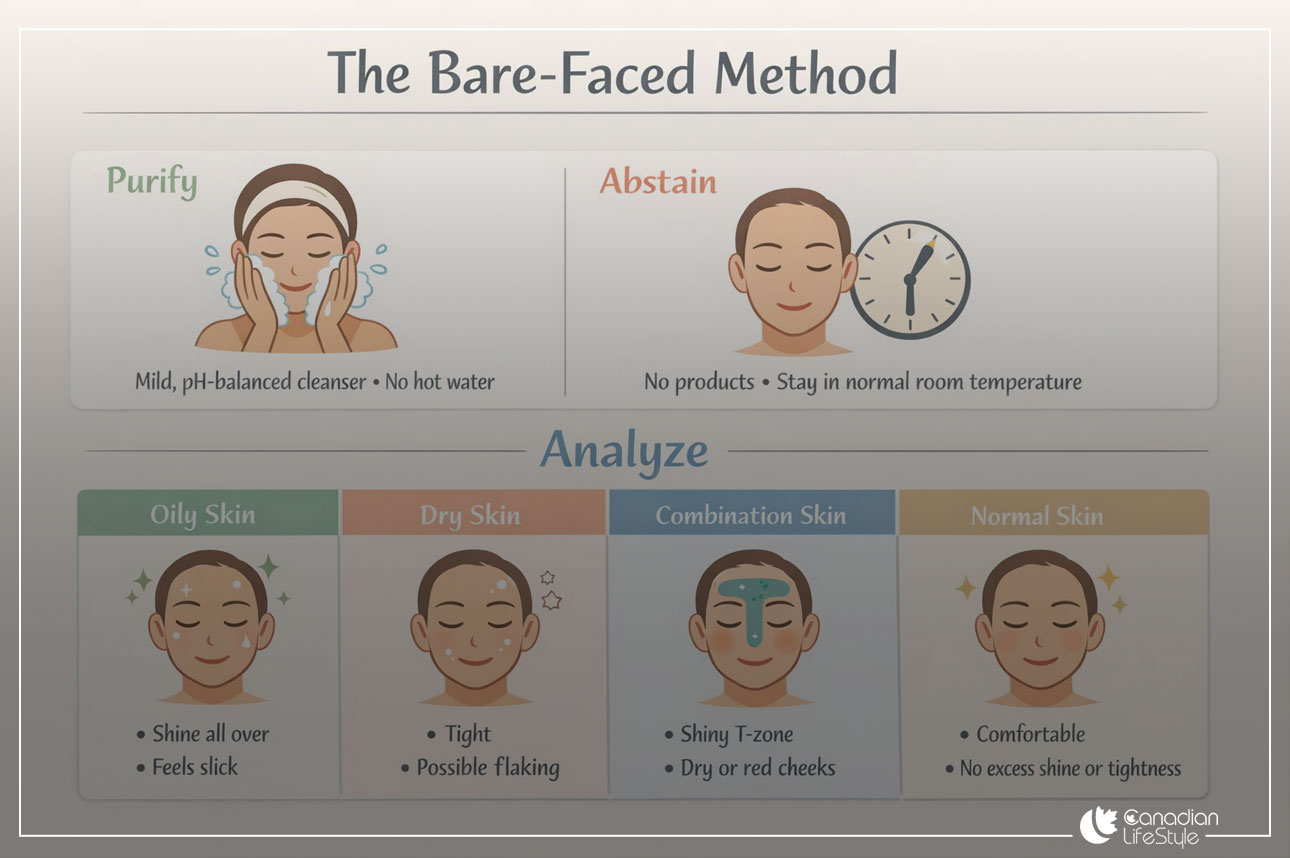
- Purify: Wash your face with a mild, pH-balanced cleanser to remove debris, pollutants, and previous product residue. Avoid using hot water, as it can cause temporary vasodilation and skew the results.
- Abstain: Gently pat dry and do not apply any toners, serums, or moisturizers. Leave your skin "bare" for exactly 60 to 90 minutes. It is crucial to stay in a temperature-controlled environment during this time to avoid sweating.
- Analyze: Observe the skin's texture and shine under natural light:
- Oily Skin: You will notice a visible shine across the entire face, including the cheeks and temples. The skin may feel "heavy" or slick to the touch.
- Dry Skin: A persistent feeling of tightness will occur, especially when making facial expressions. You may see possible flaking and a dull, matte complexion.
- Combination Skin: You will observe a noticeable shine in the T-zone while the cheeks remain matte, feel tight, or even appear slightly red.
- Normal Skin: No significant shine or tightness is present; the skin feels supple, balanced, and remarkably comfortable.
The Blotting Sheet Method
If you are looking for a more tactile and physical approach to knowing your skin type, the blotting sheet method provides a physical measurement of lipid distribution across different facial quadrants.
- Preparation: Follow the same cleansing steps as the Bare-Faced Method and wait approximately 30 to 45 minutes for the sebaceous glands to resume their natural activity.
- Application: Take professional-grade blotting papers (or clean tissue paper) and gently press them on different areas: the forehead, the bridge of the nose, the chin, and both cheeks. Do not rub; only press.
- Evaluation: Hold the paper up to a natural light source to check for oil transparency:
- Abundant oil saturation from all areas tested indicates an oily profile with hyperactive glands.
- Minimal to no oil traces on any part of the paper suggests a dry skin type or a severely compromised lipid barrier.
- Oil saturation only from the nose and forehead while the cheek paper remains clean confirms a combination skin type.
Take the knowing your skin type quiz
While manual tests are effective for immediate observation, a specialized knowing your skin type quiz integrates lifestyle factors, environmental humidity, age-related changes, and genetic predispositions into a final diagnosis. Our clinical assessment tool goes beyond surface-level shine to analyze your skin’s reactivity to specific active ingredients like Retinoids, L-Ascorbic Acid, and Alpha Hydroxy Acids (AHAs).
By engaging with a structured quiz, you receive a data-driven profile that distinguishes between "surface dehydration" (a temporary condition caused by weather or diet) and "true dry skin" (a genetic type characterized by low sebum production). This is a crucial distinction for selecting the correct lipid-replenishing products versus simple water-binding humectants. Furthermore, the quiz helps identify the degree of your skin's sensitivity, which is vital for choosing the correct concentration of exfoliants.
What are the 4 skin types? (And more)
In the realm of professional aesthetics and dermatology, we recognize four primary genetic categories. However, modern research into the skin's microbiome and inflammatory pathways often includes sensitive and acne-prone skin as distinct types.
|
Skin Type
|
Sebum Production
|
Pore Size
|
Primary Concern
|
|
Normal
|
Balanced (Eudermic)
|
Small / Unnoticeable
|
Maintenance & Protection
|
|
Oily
|
Overactive (Hyperseborrhea)
|
Large / Visible
|
Congestion, Shine & Acne
|
|
Dry
|
Underactive (Sebostasis)
|
Nearly Invisible
|
Flaking, Dullness & Tightness
|
|
Combination
|
High (T‑Zone) / Low (Cheeks)
|
Varied
|
Balancing dual requirements
|
|
Sensitive
|
Variable / Reactive
|
Usually Small
|
Redness, Itching & Irritation
|
Deep Dive into Epidermal Classifications:
- Normal Skin (Eudermic): This is the "holy grail" of skin health. The sebum and moisture levels are in perfect equilibrium, meaning the skin's hydrolipidic film is intact. The skin barrier is robust, providing excellent protection against pathogens, allergens, and oxidative stress. Normal skin serves as the baseline for preventive care and long-term maintenance.
- Oily Skin: Characterized by hyperactive sebaceous glands. While this type is more prone to comedones (blackheads) and inflammatory papules, the higher lipid content often results in a thicker dermis and fewer fine lines as you age. The challenge is managing the aesthetic shine without disrupting the moisture balance.
- Dry Skin: This type lacks the essential lipids—specifically ceramides, cholesterol, and fatty acids—needed to retain moisture. Without these, the skin becomes permeable to irritants, leading to a "tight" sensation and a heightened risk of early skin senescence , manifesting as deep-set wrinkles and loss of elasticity.
- Combination Skin: The most common and complex profile. It involves a localized density of sebaceous glands in the center of the face, while the periphery lacks sufficient oil production, leading to a constant struggle between hydration and oil control.
- The 6th Type - Sensitive/Reactive Skin: This type is defined by a hyper-reactive immune response within the skin layers. Knowing your skin type as sensitive is vital to avoid denatured alcohols, synthetic fragrances, and harsh surfactants that trigger contact dermatitis and neurogenic inflammation.
Normal skin type: Characteristics and care
Normal skin, scientifically referred to as eudermic, represents a state of physiological equilibrium. Knowing your skin type as "normal" means your skin possesses a perfectly functioning permeability barrier, where the ratio of water to sebum is ideal. Unlike other profiles, normal skin does not exhibit chronic sensitivity, and its acid mantle stays within the optimal pH range of 4.5 to 5.5, which is essential for a healthy microbiome.
The vascular circulation in normal skin is consistent, providing a healthy, rosy glow without visible capillaries or persistent dullness. However, even a balanced complexion requires a strategic maintenance routine to prevent extrinsic aging caused by UV radiation, blue light, and airborne pollutants. To preserve this harmony, we have formulated a professional-grade suite of essentials.
Our Micellar Water for normal skin utilizes gentle micelle technology to lift impurities and microscopic dust without disrupting the delicate lipid layer. For exfoliation, our Scrub for normal skin employs micro-fine, rounded particles to promote cellular turnover safely without causing micro-tears. To lock in hydration, our Moisturizer provides non-comedogenic emollients that mimic the skin's natural sebum, and our high-spectrum Sunscreen ensures your balanced complexion remains protected from photoaging and DNA damage.
oily skin type: How to manage excess sebum
Oily skin is characterized by sebaceous hyperplasia or overactive oil glands, often localized in the T-zone and cheeks. Knowing your skin type as oily is the first step in managing follicular congestion and the characteristic "greasy shine" that persists throughout the day. This type is genetically predisposed to produce higher levels of dihydrotestosterone (DHT), which signals the glands to increase sebum output.
While oily skin is naturally more resilient to environmental dryness, it is highly prone to acne vulgaris and dilated pores. The goal is not to "strip" the skin with harsh alcohols—which triggers reactive seborrhea (the skin producing even more oil to compensate)—but to balance it. Managing this profile requires specific active ingredients like Niacinamide and Salicylic acid to penetrate the lipophilic environment of the pores.
We offer a specialized Micellar Water for oily skin that removes excess lipids and heavy makeup while maintaining essential hydration. Our Scrub is designed with exfoliating acids to decongest pores and prevent the formation of comedones. To follow, our oil-free Moisturizer provides essential humectants like hyaluronic acid without a greasy finish, and our ultra-light, mattifying Sunscreen offers a broad-spectrum shield that controls oil while protecting your skin.
Dry skin type: Symptoms and hydration
Dry skin, or xerosis, is a condition where the skin lacks the necessary lipids—specifically ceramides 1, 3, and 6-II—to form a functional moisture seal. Knowing your skin type as dry means recognizing that your skin has a compromised "brick and mortar" structure in the stratum corneum. This leads to a high rate of Transepidermal Water Loss (TEWL), resulting in chronic tightness, itching, and the early appearance of fine lines around the eyes and mouth.
Dry skin often feels rough to the touch because the natural desquamation process is impaired due to a lack of moisture. To restore this barrier, a lipid-replenishing routine is vital. Our Micellar Water for dry skin is enriched with nourishing oils and hydrating agents to soothe the skin during the cleansing process. To address flakiness, our cream-based Scrub gently polishes the surface while delivering essential nutrients back into the skin. Our intensive Moisturizer is formulated with high concentrations of occlusives and emollients to physically repair the lipid barrier, and our moisturizing Sunscreen ensures your skin stays hydrated and protected against the drying effects of UV rays and wind.
Combination skin type: Balancing the T-Zone
Combination skin is perhaps the most complex profile to manage, as it involves the presence of two distinct physiological environments on a single face. Knowing your skin type as combination usually means identifying an oily T-zone (forehead, nose, and chin) alongside dry or normal cheeks (the U-zone). This happens because the density of sebaceous glands is significantly higher in the center of the face, leading to visible pores in the middle and tightness on the sides.
The challenge with combination skin is treating the oiliness without exacerbating the dryness of the peripheral areas. A "zonal" approach to skincare is often the most effective. To simplify this, we have developed a balanced range of products. Our Micellar Water for combination skin effectively targets excess oil in the T-zone while remaining gentle and non-stripping on dry patches. Our Scrub provides uniform texture by removing dead skin cells without over-drying. Our dual-action Moisturizer uses smart-delivery systems to balance sebum while providing deep hydration where it is needed most, and our lightweight Sunscreen provides a non-greasy, comprehensive shield for the entire face.
Sensitive skin: Managing redness and irritation
Sensitive skin is defined by a hyper-reactive immune response and a weakened epidermal barrier that allows irritants to penetrate more easily. Knowing your skin type as sensitive means you likely experience "burning," "stinging," or "itching" in response to fragrances, harsh alcohols, or sudden climate changes. This skin type is often associated with a thin stratum corneum, where the skin's nerve endings are more exposed to external triggers.
Managing sensitive skin requires a "less is more" philosophy, focusing on soothing anti-inflammatory ingredients like Allantoin, Bisabolol, and Centella Asiatica. Every product in our sensitive range is hypoallergenic, fragrance-free, and dermatologically tested for high tolerance. Our Micellar Water for sensitive skin is a pH-neutral formula that calms redness instantly upon contact. Our Scrub uses extremely soft, spherical particles to avoid micro-tears and irritation. To reinforce the skin's defenses, our soothing Moisturizer acts as a protective "second skin," and our mineral-based Sunscreen provides a physical barrier against UV rays without the chemical filters that often cause discomfort for reactive skin.
Knowing your skin type free: Visual signs to look for
Knowing your skin type through visual semiotics is a clinical skill that focuses on the diagnostic observation of the skin’s surface morphology under various lighting conditions. This process involves analyzing the pore diameter, surface reflectivity, and epidermal texture without the need for expensive dermatological imaging tools.
To begin knowing your skin type visually, examine your face in a mirror under natural North-facing light, which provides the most neutral spectrum for color and texture analysis. Look for the following physiological indicators:
- Pore Visibility and Distribution: Large, circular indentations across the nose, chin, and forehead are primary indicators of overactive glands. If pores are visible in the T-zone but virtually non-existent on the cheeks, you have a combination profile. Identifying these areas is the first step in the targeted Treatment of Facial Blemishes , as it allows for precise application of clarifying agents.
- Surface Reflectivity (The "Shine" Factor): Does your skin reflect light uniformly across the forehead and cheeks, or does it appear "flat" and light-absorbent? A healthy "glow" is a result of a smooth surface reflecting light, whereas true oiliness feels "slick" and looks greasy.
- Micro-cracking and Flakiness: If you observe fine, parchment-like lines or white flaking around the mouth or eyebrows, your skin is signaling a severe lipid deficiency. Knowing your skin type as dry is critical here to prevent further barrier damage.
- Vascular Reactivity: Persistent redness or visible capillaries around the base of the nose are visual hallmarks of a sensitive profile.
How to know your skin tone color and undertone
While knowing your skin type focuses on oil production, understanding your skin tone and undertone is essential for selecting the correct SPF formulations that won't leave a "white cast." Skin tone (overtone) is determined by the concentration of melanin in the epidermis, while the undertone is the subtle hue beneath the surface that remains constant throughout your life.
Identifying Your Surface Tone
Surface tones are generally categorized into four levels: Fair, Light, Medium, and Deep. This can change based on your level of UV exposure or the presence of post-inflammatory hyperpigmentation.
The Science of Undertones: Warm, Cool, and Neutral
Knowing your skin type and its undertone is a dual-process for a perfect product match. To find your undertone, use these clinical observation methods:
- The Venous Test: Examine the veins on the inside of your wrist. If they appear blue or purple, you have a Cool undertone. If they look greenish, you have a Warm undertone. If you see both or cannot distinguish, you are likely Neutral.
- The Jewelry Reaction: If silver jewelry brightens your complexion, you are Cool. If gold jewelry makes your skin look more vibrant, you are Warm.
- White Paper Comparison: Hold a piece of pure white paper next to your bare face in natural light. If your skin looks pink or rosy against the paper, you are Cool. If it looks yellow or sallow, you are Warm.
Knowing both your skin type and your undertone ensures that when you use our Sunscreen, you select one that complements your natural pigment without causing a dull appearance.
Knowing your skin type app: Technology in Dermatology
In the digital age, the concept of a knowing your skin type app has gained massive popularity. These applications leverage Artificial Intelligence (AI) and Machine Learning (ML) algorithms to analyze high-resolution selfies and provide a detailed diagnostic report.
A professional knowing your skin type app usually employs Computer Vision technology. This technology breaks down the image of your face into thousands of data points, comparing your skin's texture to a vast database of clinical samples. This allows for a level of personalized skincare that was previously only available in specialized clinics. However, while an app is a fantastic starting point, it should be used as a complementary tool alongside the manual observation methods to track the real-world progress of your Moisturizer and Scrub usage.
Conclusion: Mastering Your Skincare Journey
Knowing your skin type is a clinical necessity for anyone serious about long-term skin health. As we have explored, the interplay between your glands, your lipid barrier, and your skin’s reactivity determines how every product—from your Micellar Water to your Sunscreen—interacts with your cells. Without accurately knowing your skin type, even the most expensive ingredients can lead to adverse effects like barrier damage or congestion.
By utilizing the skin type test at home or a professional knowing your skin type app, you have taken the most significant step toward achieving a balanced, radiant complexion. Now that you have the scientific tools to identify your profile, it is time to provide your skin with the specific molecular support it craves. Our meticulously engineered range—including our Scrub, Micellar Water, Moisturizer, and Sunscreen—is formulated to meet the unique physiological demands of your specific skin category. Stop guessing and start nourishing your skin with precision.
Skin Type Test Online: Frequently Asked Questions
▶ Is there an app that can tell me what skin type I have?
Yes. Today, several smart apps and online tools can help identify your skin type using a combination of visual analysis and lifestyle-based questions. Many rely on your smartphone’s camera to assess oiliness, pore visibility, and surface hydration, while also factoring in climate, age, and daily habits. While these tools are not a replacement for a dermatologist, they are a practical first step in knowing your skin type and choosing products—such as micellar waters or exfoliating scrubs—that suit your skin’s actual needs.
▶ Can my skin type change from oily to dry?
Absolutely. Skin type is not fixed for life. Factors such as aging (which naturally decreases sebum production), hormonal changes, medications, and even relocation to a different climate can alter how your skin behaves. For example, many people experience oily skin in their teenage years and gradually shift toward combination or dry skin over time. This is why knowing your skin type should be revisited periodically rather than treated as a one-time assessment.
▶ Why does my skin feel oily but look flaky?
This usually indicates dehydrated oily skin. In this case, your skin type produces excess oil, but your skin condition lacks sufficient water. Overuse of harsh cleansers, alcohol-based toners, or frequent exfoliation can weaken the skin barrier, leading to surface flaking despite an oily feel. Correctly identifying your skin type helps you focus on gentle cleansing, barrier repair, and hydration—rather than trying to “dry out” the skin further.
▶ How often should I perform a skin type test?
Most dermatologists recommend reassessing your skin type at least twice a year—typically before summer and winter. Environmental changes such as heat, humidity, cold air, and indoor heating can significantly affect oil production and moisture retention. Regularly checking your skin type allows you to adjust essentials like moisturizers and sunscreen so your routine stays aligned with your skin’s current needs.